
Should You Interview Your Mediator?
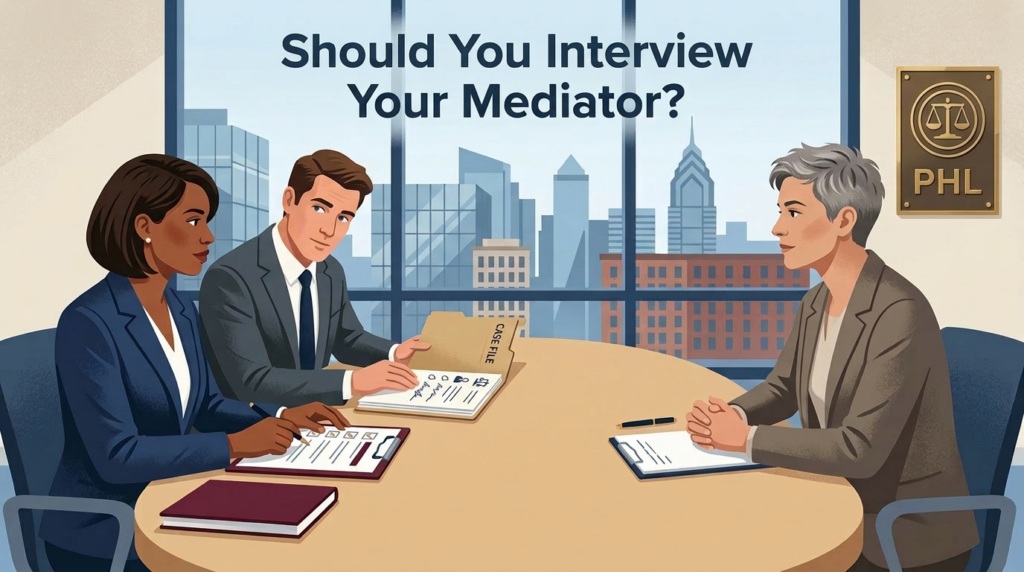
Not long ago, two attorneys reached out to me before agreeing to bring me on as their mediator. They wanted to understand my experience with their specific, niche commercial matter. The attorneys asked about my process, my strategies, and subject-matter knowledge. They were direct, prepared, and professional. And honestly? It was one of the most refreshing pre-mediation experiences I’ve had.
My answer to their request was easy: let’s go. But here’s the question that’s been on my mind since: why don’t more attorneys do this?
Mediator selection is often treated as an afterthought. Someone suggests a name, opposing counsel doesn’t object, and a date gets picked. That reactive approach might work fine for a straightforward dispute. But for complex commercial litigation — the kind where millions of dollars, long-term business relationships, or hard-to-replace intellectual property are on the line — leaving mediator selection to convenience is a disservice to your client. Interviewing your mediator before committing shouldn’t be unusual. It’s strategic lawyering.
Why Most Attorneys Don’t Vet Their Mediator
The “Name in a Hat” Problem
The most common mediator selection process goes something like this: opposing counsel floats a few names, your side doesn’t have a strong objection to one or two, and the matter is settled in five minutes. It’s efficient. It’s also lazy. The mediator you end up with may be perfectly competent, but “no objection” is a low bar when you’re preparing for a high-stakes dispute.
Similarly, when attorneys receive a few names, if a name on their list doesn’t match a name on your list, automatic rejection, Even “worse,” if you haven’t heard of someone on the list, automatic rejection. You are closing yourself off to someone who might be a great fit, yet because there’s no name recognition and you might be too busy to research them yourself, you pass.
Time Pressure and Convenience
Litigation moves fast. By the time mediation is agreed upon, counsel is often already buried in discovery, briefing, or trial prep. The temptation is to treat mediator selection as a logistical checkbox rather than a strategic decision. But that time pressure is exactly why building a vetting step into your standard ADR workflow matters (more on that below).
The Myth That Mediators Are Interchangeable
They’re not. Mediators differ in subject matter background, professional history, style, temperament, and approach. The Philadelphia commercial litigation market is sophisticated enough that attorneys here know better than to assume otherwise. A mediator is not a commodity; they’re a key variable in your settlement outcome.
Not Every Case Is Right for Every Mediator
Subject Matter Expertise Is Non-Negotiable in Complex Cases
A mediator handling a niche commercial dispute needs to understand the terrain. Not just “business disputes” generally, but the specific dynamics of, say, a shareholder deadlock, a software licensing conflict, or a complex construction defect claim. When a mediator understands the legal and industry context, they ask better questions, they recognize leverage points the parties may be overlooking, and they earn credibility in the room faster.
The two attorneys who called me were dealing with exactly this kind of specialized matter. Through our conversation, they confirmed that I had direct experience with the subject matter, understood the commercial stakes, and could speak the industry’s language. That call took less than 30 minutes — and it gave both sides confidence before we ever sat down together.
Generalist vs. Specialist
There’s a place for generalist mediators — they can be exceptional in the right context (I am one to a certain extent). But for complex commercial mediation in Philadelphia, you want to understand what’s in your mediator’s background. Have they handled disputes in your industry? Do they have litigation or transactional experience that maps to the case? Does that even matter? This is all part of the selection process.
It’s Not Just About Knowledge — It’s About Fit
Personality Dynamics in the Mediation Room
Knowledge gets you in the door. Fit keeps the process moving. An effective mediator reads the room, and that means reading people. If a mediator’s communication style clashes with your client, if their tone feels condescending to a business owner who built their company from scratch, or if they can’t build basic rapport with a skeptical opposing party, the session can stall before it ever gets traction.
Evaluative vs. Facilitative Style
These are meaningfully different approaches. An evaluative mediator offers assessments of the strengths and weaknesses of each side’s position. This is useful in cases where parties are anchored to unrealistic expectations. A facilitative mediator focuses on the parties’ interests and keeps the conversation moving without rendering opinions. A hybrid approach – the one I use – draws on both. The right style depends on your case, your client, and the dynamics on the other side of the table. When you interview a mediator, ask directly: How would you describe your style? When do you shift approaches?
Rapport as a Settlement Tool
Mediators who can build genuine rapport with parties — not just their lawyers — are worth their weight. Business owners who feel heard and respected by the neutral are more likely to stay engaged, consider creative solutions, and ultimately reach a deal. That intangible quality is hard to find on a resume. It’s much easier to gauge in a 20-minute conversation.
What to Ask When You Interview a Mediator
When you call a mediator before committing, come prepared. Here are seven questions worth asking every time:
- What is your experience with cases involving [specific subject matter]?
- How do you describe your mediation style?
- Do you have any prior relationships with the parties, counsel, or insurers?
- How do you structure your sessions: caucus-heavy or joint session-forward?
- What does your pre-mediation process look like? Do you request briefs? Hold pre-mediation calls?
- What’s your track record in commercial cases of this type and complexity?
- What is your availability within our timeline, and what are your fees?
Most Philadelphia-area mediators — myself included — should genuinely welcome these conversations. They are not impositions. They’re a sign that you’re a prepared, client-focused attorney who takes mediation seriously.
This Is What Strategic Lawyering Looks Like
Vetting a Mediator Is No Different from Vetting an Expert Witness
You wouldn’t put an expert on the stand without vetting their credentials, reviewing their prior testimony, and making sure their opinions can withstand cross-examination. Why would you put an untested mediator in a room with your client and opposing counsel and just hope for the best? The stakes are the same. The diligence should be too.
Your Client Is Counting on You
When a case reaches mediation, your client has often been through months (or years) of litigation. They’re ready to resolve. Putting the wrong neutral in the room can mean a failed session, a reset in settlement momentum, and additional legal fees. Choosing the right mediator isn’t just good practice. It’s a professional obligation.
A Bad Fit Can Kill a Deal That Should Have Closed
I’ve seen it happen. A settlement that both parties genuinely wanted to reach fell apart because the mediator lacked the credibility to bridge the gap, or because one party lost confidence in the process. The right mediator doesn’t guarantee settlement, but the wrong mediator can guarantee you don’t get there.
A Good Mediator Will Welcome the Call
What the Interview Itself Reveals
Pay attention to how a mediator responds to your inquiry. Do they engage thoughtfully? Are they willing to talk candidly about their approach, their background, and their limitations? A mediator who is confident in their practice welcomes scrutiny. They understand that a well-matched case is better for everyone, including them.
What to Look For
You want transparency, confidence, and zero defensiveness. A good mediator will tell you honestly if they have a gap in experience with your case type. They’ll explain their style clearly and without spin. They’ll raise potential conflicts proactively rather than waiting to be asked.
Red Flags to Watch For
Be wary of a mediator who seems rushed to get off the call, who gives vague non-answers about their experience, or — and this one matters — who seems offended that you asked. Defensiveness is not a neutral quality. A mediator who can’t handle a professional inquiry probably won’t handle an impasse well either.
When those two attorneys called me, I walked away from the conversation with a clearer picture of what the case needed and how to prepare. The interview made me a better mediator for their dispute before day one.
Making it Standard Practice in Your Firm
Build a Vetting Checklist into Your ADR Workflow
Create a simple internal process: when mediation is agreed upon, before any name is confirmed, a brief vetting call is scheduled. Use the seven questions above as your baseline. Document the responses. It takes less than an hour and can meaningfully improve outcomes.
Keep a Vetted Short-List by Case Type
The best firms and in-house legal teams maintain a running list of mediators they’ve vetted and worked with, organized by case type. Commercial disputes, employment matters, construction claims, IP conflicts; each category benefits from a mediator with relevant depth. Build that list before you need it, not while you’re under deadline pressure.
Align with Opposing Counsel on Criteria, Not Just Availability
When both sides agree on what they’re looking for in a mediator — not just who’s available on a given Tuesday — the selection process becomes collaborative and strategic rather than arbitrary. Across the tri-state region (Pennsylvania, New Jersey, and Delaware), there’s a strong pool of qualified mediators. Quality varies. Due diligence distinguishes the good choices from the great ones.
Ready to Have That Conversation?
Choosing the right mediator is one of the most consequential decisions you’ll make in a case.
The attorneys who called me before committing to our session understood that and it made our mediation better from the start. If you’re preparing for a commercial mediation in Philadelphia, South Jersey, the Greater Delaware Valley, or anywhere in between, I welcome the call before you commit to anything. Let’s talk about your case, your needs, and whether I’m the right fit. You can find me at ajsresolutions.com, asliffman@ajsresolutions.com, 267-681-0890, or simply book a 30-minute call HERE.